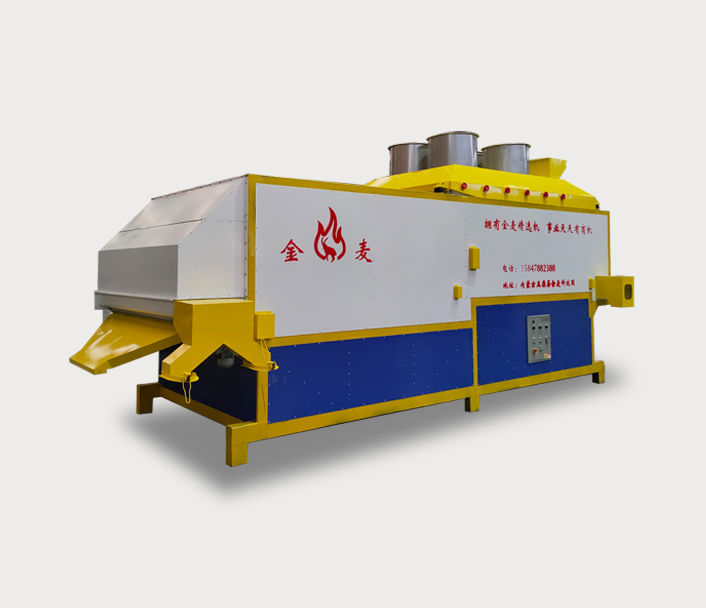
Proper operation and maintenance of the raw material selection machine are crucial for ensuring efficient operation and extending the service life of the equipment. Here are the specific methods:
1、 Correct operation
1. Preparation before startup
-Check the equipment: Before starting up, carefully inspect whether all components of the raw material selection machine are intact and undamaged. Check whether the screen mesh is damaged or loose, and if so, replace or tighten it in a timely manner. Check whether the transmission components, such as belts, chains, etc., are properly tensioned and whether there are signs of wear or breakage. At the same time, check whether the connecting bolts of the equipment are tightened to ensure that the equipment will not loosen during operation.
-Cleaning equipment: Clean the internal and surrounding debris, dust, etc. of the equipment to prevent these impurities from entering the equipment and affecting the screening effect. Especially the residual materials on the sieve should be cleaned thoroughly to ensure the permeability of the sieve.
-Check the electrical system: Check whether the electrical circuits are well connected, whether there are any damages, short circuits, etc. Check if the direction of the motor is correct, which can be confirmed by jogging the motor. At the same time, check whether the buttons, indicator lights, etc. on the control panel are working properly.
2. Operation process
-Feed control: After starting the raw material selection machine, the feed should be gradually and evenly fed into the equipment to avoid excessive feeding at once, which may cause equipment blockage or poor screening effect. Reasonably control the feeding speed and amount based on the processing capacity of the equipment and the characteristics of the raw materials. For example, for raw materials with larger particles and poor flowability, the feed rate should be appropriately reduced to ensure screening effectiveness.
-Adjust parameters: During operation, adjust the equipment parameters in a timely manner based on the actual situation of the raw materials and screening requirements. Such as adjusting vibration frequency, wind speed, grading granularity, etc. When adjusting parameters, it should be done gradually, observing the changes in the screening effect until the desired screening effect is achieved. For example, when there are many impurities in the raw materials, the wind speed can be appropriately increased to enhance the impurity removal effect.
-Observing the operating status: During the operation of the equipment, it is necessary to closely observe the operating status of the equipment. Pay attention to whether the device has abnormal noise or excessive vibration. Observe the screening effect of the sieve and check for blockages, leaks, and other issues. If any abnormal situation is found, the machine should be stopped immediately for inspection, and the fault should be eliminated before continuing to operate.
3. Shutdown operation
-Stop feeding: Before stopping the machine, the feeding into the equipment should be stopped first, and the equipment should continue to run for a period of time to discharge all residual materials inside the equipment. This can prevent residual materials from accumulating inside the equipment and affecting the screening effect during the next startup.
-Turn off the equipment: After all residual materials in the equipment are discharged, turn off the power of the raw material selection machine. Wait for the equipment to completely stop running before proceeding with subsequent cleaning and maintenance work.
2、 Maintenance and upkeep
1. Daily maintenance
-Cleaning equipment: After each day's work, conduct a comprehensive cleaning of the equipment. Use compressed air or brooms to clean the dust and debris on the surface of the equipment. For parts such as the sieve, feed inlet, and discharge outlet, they should be cleaned with a brush or damp cloth to ensure that there is no residual material in these areas.
-Inspect vulnerable parts: Regularly check the vulnerable parts of the equipment, such as screens, belts, chains, bearings, etc. Observe the wear and tear of vulnerable parts, and replace them promptly if there is severe wear or damage. For example, after a period of use, the sieve may become damaged or clogged, and it should be replaced or cleaned in a timely manner to ensure the screening effect.
-Lubrication and maintenance: Regularly lubricate and maintain the transmission components of the equipment, such as bearings, gears, etc. According to the user manual of the equipment, select the appropriate lubricating oil or grease and add it according to the specified time and method. For example, for rolling bearings, lithium based grease can be used for lubrication, which should be added at regular intervals (such as one month).
2. Regular maintenance
-Comprehensive inspection: Conduct a comprehensive inspection of the equipment at regular intervals (such as every month or quarter). Check whether the various components of the equipment are working properly, and whether there are any looseness, wear, deformation, etc. Check whether the insulation performance of the electrical system is good and whether there is any leakage phenomenon. At the same time, evaluate the screening effect of the equipment and adjust and optimize it if necessary.
-Maintenance: Based on the inspection results, carry out corresponding maintenance work on the equipment. For severely worn components, they should be replaced in a timely manner; For loose components, they should be tightened; For deformed components, they should be corrected or replaced. At the same time, maintain the electrical system of the equipment, such as checking the insulation resistance of the motor and cleaning the dust inside the control cabinet.
-Equipment debugging: After completing maintenance work, debug the equipment. During the debugging process, it is necessary to check whether the various parameters of the equipment meet the requirements and whether the screening effect is good. If necessary, multiple adjustments can be made until the equipment reaches the desired operating state.
By correctly operating and maintaining the raw material selection machine, the efficient operation of the equipment can be ensured, the screening effect can be improved, the service life of the equipment can be extended, and reliable guarantees can be provided for the production process.