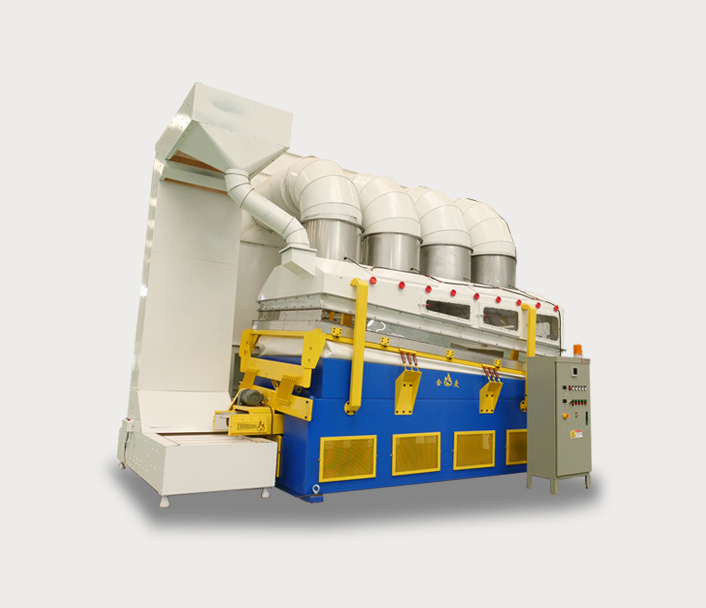
Regular maintenance of dust-free negative pressure specific gravity machines is key to ensuring stable equipment performance and extending service life, especially in industries such as pharmaceuticals, food, and electronics that require high environmental cleanliness. Improper maintenance may lead to product contamination or equipment failure. The following are the key aspects to pay attention to during maintenance and specific operational suggestions:
1、 Environmental cleanliness and dust control
1. Cleanroom environment maintenance
Air filtration system inspection: Regularly replace the HEPA high-efficiency filter (usually every 6-12 months), monitor the pressure difference gauge, and replace it immediately if the pressure difference is less than 20% of the initial value to prevent particle penetration.
Floor and wall cleaning: Use an anti-static dust-free cloth dipped in 75% isopropanol to wipe, avoid using ordinary cloths or water, and prevent static electricity from adsorbing dust or corroding the surface.
Temperature and humidity control: Maintain a temperature of 22 ± 2 ℃ and a humidity of 45-65% RH. If it exceeds the range, adjust the air conditioning system to prevent material moisture absorption, deformation, or static electricity generation.
2. Dust prevention on equipment surface
Sealing strip inspection: Check the door seals and pipeline interface sealing strips weekly. If cracks or aging occur, replace them immediately to prevent external particles from entering.
Dust cover usage: Cover the equipment dust cover when not in operation to prevent dust from depositing on the operation panel or sensor.
2、 Mechanical component maintenance
1. Lubrication of transmission system
Lubrication of bearings and chains: Apply food grade grease (such as NSF H1 certification) to the bearings and chains of the conveyor belt every month to avoid contamination caused by the use of ordinary lubricants.
Gearbox oil level inspection: Check the gearbox oil level every quarter. If it is below the scale line, add lubricating oil of the same model to prevent gear wear.
2. Vibration and noise monitoring
Vibration analysis: Use a vibration meter to detect the vibration value of the motor and reducer. If it exceeds 5mm/s, tighten the bolts or replace the bearings.
Noise inspection: If the noise exceeds 75dB during operation, check whether the fan and pulley are loose, or whether the transmission components are worn.
3、 Electrical system maintenance
1. Power and grounding inspection
Voltage stability: Use a multimeter to detect the fluctuation range of input voltage (within ± 5%). If it exceeds the range, a voltage regulator needs to be installed.
Grounding resistance test: Use a grounding resistance tester to test the grounding wire every year, and the resistance value should be less than 4 Ω to prevent static electricity accumulation or electric shock risk.
2. Sensor calibration
Pressure sensor calibration: Use a standard pressure source to calibrate the negative pressure sensor every six months. If the error exceeds ± 1%, it needs to be adjusted or replaced.
Temperature sensor verification: Compare the temperature displayed by the device with the data from the infrared thermometer. If the deviation is greater than ± 2 ℃, recalibration is required.
3. Line insulation testing
Insulation resistance test: Use a megohmmeter to test the insulation resistance of motor and control cabinet circuits every year. The resistance value should be greater than 1M Ω to prevent leakage or short circuit.
4、 Negative pressure system maintenance
1. Cleaning of fans and pipelines
Fan impeller cleaning: Disassemble the fan impeller every quarter and blow away dust with compressed air to avoid dynamic balance damage caused by dust accumulation.
Pipeline leakage detection: Use a smoke generator to detect negative pressure pipelines. If a leak is found, it needs to be repaired with sealant or flange gasket.
2. Negative pressure monitoring
Pressure gauge calibration: Use a standard pressure gauge to calibrate the negative pressure gauge every month, and replace it if the error exceeds ± 2%.
Air volume regulation: Adjust the fan frequency according to process requirements, maintain the negative pressure value within the set range (such as -50 to -100Pa), and prevent pollution caused by insufficient negative pressure.
5、 Software and control system maintenance
1. PLC program backup
Regular backup: Use programming cables to backup PLC programs to a portable hard drive every quarter to prevent program loss or accidental modification.
Version update: Upgrade PLC firmware according to device manufacturer notification and fix known vulnerabilities.
2. Human Machine Interface (HMI) Inspection
Touch screen calibration: If the touch screen response is sluggish or offset, use calibration tools to reposition it.
Alarm function test: Simulate scenarios such as abnormal negative pressure and temperature exceeding limits to verify whether the alarm information is accurately triggered.
6、 Security protection maintenance
1. Emergency stop button test
Monthly testing: Press the emergency stop button to verify if the device immediately stops running and cannot be restarted through the reset button.
Button cleaning: Use a dust-free cloth to wipe the emergency stop button to prevent poor contact caused by dust.
2. Interlock inspection of protective doors
Interlock function verification: When the protective door is opened, the equipment should automatically stop. If it fails, the limit switch should be adjusted or the sensor should be replaced.
7、 Spare parts and consumables management
1. Key spare parts inventory
Establish a list: Reserve vulnerable parts such as HEPA filters, seals, bearings, etc., and the inventory should meet the demand for 3 months of use.
Supplier evaluation: Select spare parts suppliers with ISO 13485 certification to ensure reliable quality.
2. Consumables replacement record
Traceability management: Record the batch of filters and lubricants replaced each time, facilitating the traceability of quality issues.
8、 Maintain records and analyze data
1. Maintain log filling
Detailed records: Record maintenance dates, projects, replacement component models, and operators to ensure traceability.
Exception handling: Equipment hazards discovered during maintenance (such as excessive vibration) should be separately recorded and tracked for rectification.
2. Fault Trend Analysis
Data statistics: Analyze the types of equipment failures in the past year (such as sensor failures accounting for 30%) and optimize maintenance plans accordingly.
Preventive maintenance: Adjust maintenance cycles based on fault trends (such as changing bearing lubrication from monthly to biweekly).
9、 Personnel training and operational standards
1. Maintain personnel qualifications
Certified on duty: Maintenance personnel need to undergo equipment manufacturer training and obtain certification, and be familiar with cleanroom operating procedures.
Annual refresher training: Organize annual refresher training to update knowledge on cleanroom management, electrostatic protection, and other related areas.
2. Standardization of operating procedures
Develop SOP: Write the "Standard Operating Procedure for Maintenance of Dust free Negative Pressure Gravity Machine", specifying the requirements for each step of operation (such as the amount of lubricating oil added).
On site visualization: Post maintenance flowcharts next to the equipment to reduce human operational errors.
10、 Compliance check
1. Compliance with regulations
GMP/ISO 14644 validation: Every year, a third-party organization is commissioned to conduct cleanroom cleanliness testing to ensure compliance with ISO 14644-1 standards.
CE certification update: If the equipment is exported to the European Union, it is necessary to regularly update the CE certification to ensure compliance with MDR regulations.
2. Internal Audit
Cross departmental inspection: Organize quality, production, and equipment departments to jointly review and maintain records, identify and rectify issues.
Through systematic maintenance and management, the failure rate of dust-free negative pressure density machines can be significantly reduced, ensuring the cleanliness of the production environment and ultimately improving product quality and enterprise competitiveness.