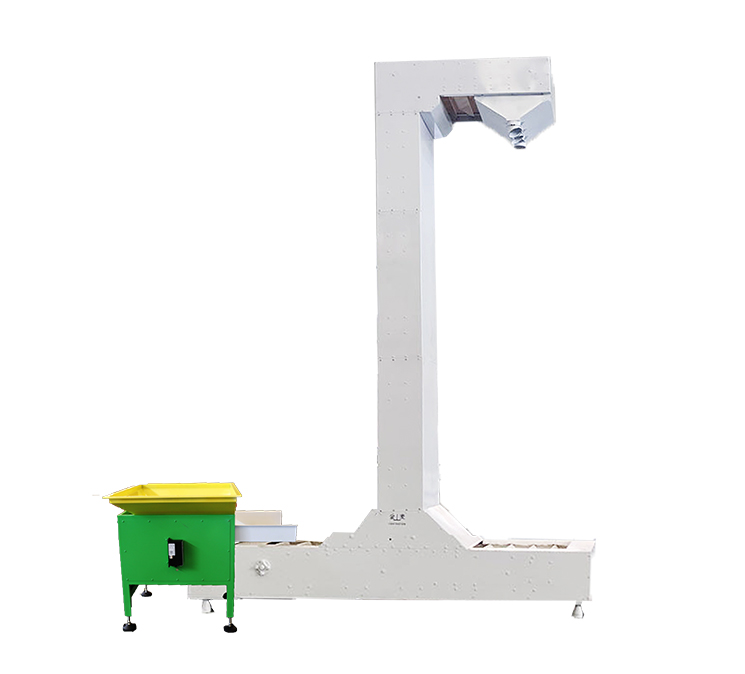
As an important equipment for material conveying, the feeding elevator is widely used in various production scenarios. Its stable operation relies on a uniform feeding rhythm. If the feeding process is not properly controlled and uneven feeding occurs, it will not only affect the conveying efficiency, but also cause a series of hidden dangers in equipment operation, and even shorten the service life of the equipment, affecting the smooth progress of the entire production process.
The direct impact of uneven feeding is the unstable operating load of the hoist. When the feeding amount suddenly increases, a large amount of material will instantly accumulate at the feeding port of the elevator, exceeding the carrying range of the equipment, causing the material to block the feeding channel and unable to enter the lifting mechanism smoothly. At this point, the motor of the hoist needs to bear a greater power load. Prolonged operation under overload conditions can accelerate motor aging, and even lead to motor overheating, burnout, and other faults, directly causing equipment shutdown and interrupting production progress.
Excessive or insufficient feeding can also cause uneven distribution of materials inside the elevator, leading to equipment vibration. When a small amount of material enters, the internal force of the elevator is unbalanced, and there will be obvious shaking and abnormal noise during operation. Long term vibration can damage the connecting components of the equipment, such as bearings, chains, conveyor belts, etc., causing loosening and accelerated wear of the components, and even serious problems such as chain breakage and conveyor belt deviation. This not only affects the normal operation of the equipment, but may also bring safety hazards.
Uneven feeding can also affect the stability and integrity of material transportation. When there is too much feed, some materials cannot be lifted in a timely manner, which will accumulate and scatter at the feed inlet, resulting in material waste; When the feed is too low, the hoist operates at low load, resulting in a significant decrease in conveying efficiency and inability to meet the material supply rhythm required for production. This leads to a shortage of raw materials in subsequent production processes, affecting production efficiency. At the same time, uneven feeding can also cause the lifted material to spill and mix unevenly, affecting the quality of subsequent processing.
In addition, uneven feeding can also exacerbate the wear of the hoist. When a large amount of material suddenly rushes in, the friction between the material and the internal components of the elevator will increase sharply, accelerating the wear of components such as the conveyor belt and hopper, shortening their service life, and increasing the maintenance and replacement costs of the equipment. Moreover, if the blocked materials are not cleaned up in a timely manner, they will harden and clump, further exacerbating equipment wear and even causing the hoist to fail to start normally, requiring a large amount of manpower and resources for cleaning and maintenance.
The uniform feeding of the feeding elevator is the key to ensuring its stable operation. Uneven feeding may seem like a small matter, but it can cause a series of chain hazards, affecting production efficiency and equipment life. Only by standardizing the feeding operation, controlling the feeding rhythm, and ensuring that the materials enter the elevator evenly and smoothly, can the equipment fully exert its conveying function, reduce the occurrence of failures, ensure the smooth progress of the production process, and reduce subsequent maintenance costs.